



Plenary Lectures
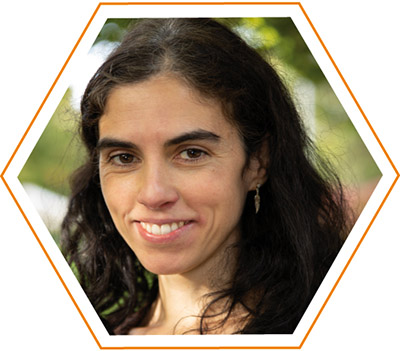
Patricia Luis Alconero
(Catholic University of Louvain, Belgium)
Title of the plenary lecture: Chemical Engineering as the driver for sustainability
Patricia Luis is professor at the University of Louvain-la-Neuve (UCLouvain), Belgium, at the Institute of Mechanics, Materials and Civil Engineering, and is head of the group “Membrane Technology for a Sustainable World”. Her main research interests address the development of novel processes using membrane technology, always with a critical vision on sustainability and environmental pollution. Key topics in her current research are CO2 capture and conversion, water treatment, process intensification, and the evaluation of the environmental impacts of novel technology via life cycle assessment. She has authored more than 170 publications in these fields with more than 10000 citations.
She is currently Council Member of the European Membrane Society, and has editorial duties as Editor-in-Chief of the journals ‘Desalination and Water Treatment’ and ‘Clean Technologies’ and member of the Editorial Boards of the ‘Journal of Chemical Technology and Biotechnology’, ‘Separation and Purification Technology’, 'C-Journal', and ‘Heliyon’, among others. She has authored the book: Fundamental Modelling of Membrane Systems, Elsevier, 2018.
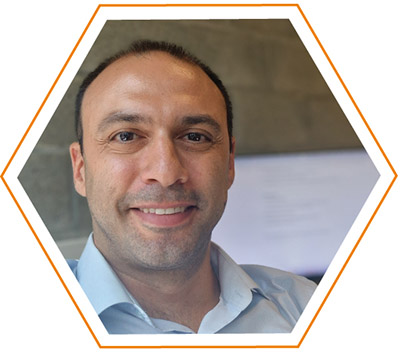
Enis Leblebici
Title of the plenary lecture: Mapping the AI Journey in Process Intensification: From Prediction to Generation
M. Enis Leblebici (b. 1983) is an associate professor of Chemical Engineering at KU Leuven specializing in scalable intensified reaction, separation and process control platforms, with a strong focus on hybrid modelling/AI for process intensification. He holds degrees from the University of Porto and KU Leuven. In addition to models and software, his group develops and scales up intensified processes such as aerosol reactors for carbon capture, photoelectrochemical reactors and photothermal reactors.
He has co-authored over 45 journal papers, 2 patents and 2 book chapters. He coordinates several national and industrial projects on process intensification and hybrid digital twins. Prof. Leblebici is the winner of Leuven Science & Technology Council Award in 2025 for opening the first AI course dedicated to chemical engineering master’s students in Belgium.

Edwin Zonderwan
(University of Twente, The Netherlands)
Title of the plenary lecture: TBA
Prof. Dr. Ir. Edwin Zondervan is a chemical engineering professor at the University of Twente, specializing in Process Systems Engineering, with a focus on optimization, process control, and sustainable process design. He leads the Sustainable Process Technology / PSE group, supervises a dynamic team of PhD students, and is active internationally through EFCE and various editorial roles, including Editor-in-Chief ofPhysical Sciences Reviews. His work bridges engineering, history, and digital innovation—ranging from superstructure optimization and supply-chain modelling to educational innovation. He is widely engaged in teaching, research leadership, public science communication, and creative outreach.
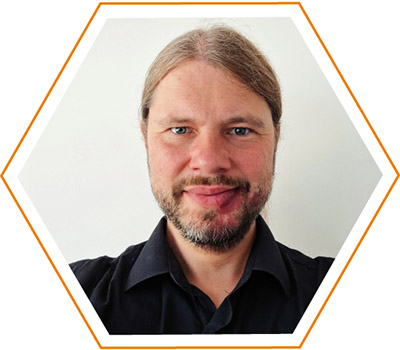
Jozef Chmelař
(ContiPro a.s., Czech Republic)
Title of the plenary lecture: Scaling up biopolymer processing: taking hyaluronan-based materials from the laboratory to pilot scale and beyond
Josef Chmelar studied at the University of Chemistry and Technology in Prague, where he obtained both his master's degree and PhD in Chemical Engineering. During this time, he focused on synthetic polymers, especially polyolefins. In 2015, he began his professional career at Contipro a.s. (Czech Republic), one of the global leaders in the production, processing, and research of hyaluronic acid. The transition from academia to industry thus marked a move toward biomaterials, but not away from polymers.
In Contipro, he gradually held the positions of Researcher, Head of Research Group and Project Manager. Over the years, he has been involved in a broad spectrum of hyaluronan-related R&D activities, ranging from applied material research (polymeric films, fibres, hydrogels) and in vivo studies to the scale-up of manufacturing technologies and process optimization. More recently, his work has focused mainly on medical device development and on the effective transfer of R&D results into new products and practical applications.
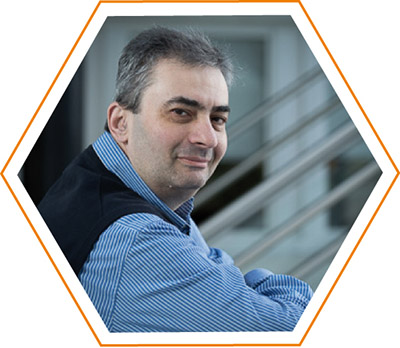
Dmitry Murzin
Title of the plenary lecture: Advancing Chemical Technology: Necessitas est mater artium
Professor Dmitry Yu. Murzin studied chemical engineering at the Mendeleev University of Chemical Technology and obtained his PhD (advisor Prof. M.I. Temkin) and DrSc degrees at Karpov Physico-Chemical Institute in 1989 and 1999, respectively. After postdoc stays in France and Finland, he was working at BASF from 1995 to 2000. Since 2000 Prof. Murzin holds the Borgström Chair of Chemical Technology at Åbo Akademi University, Turku, Finland.
Prof. Murzin holds several patents and is an author of 3 textbooks and author or co-author of ca. 1000 peer-reviewed journal articles and book chapters covering various aspects of industrial chemistry, heterogeneous catalysis, chemical technology and reaction engineering.
MAIN TOPICS
There are eight sections covering the main congress topics.
Section 1
Digitalisation and modelling
11 AI tools for chemical engineering (machine learning, cloud computing, digital twins)
12 Molecular, micro and mesoscale modelling
13 Multi-scale modeling challenges
14 Computational design and optimisation of materials
15 Process modelling, simulations and design, advanced process control
Section 2
Energy
21 Renewable and clean energy, electrification of processes
22 Hydrogen production, utilization and storage
23 Energy storage and batteries
24 Solar technologies
25 Energy saving processes, technologies and materials
Section 3
Green issues and sustainability
31 Carbon capture technologies
32 Circularity and viability
33 Water treatment and purification
34 Waste management and recycling
35 Food, land use and agrochemistry in the focus
Section 4
Fluid and granular flows
41 Mixing in chemical engineering (stirred tank reactors, granular mixing, impeller design etc.)
42 Multiphase fluid flows (gas-liquid, gas-liquid-solid) - fundamentals and applications
43 Microfluidics and process miniaturisation
44 Particle laden flows and rheology of complex fluids
Section 5
Reactor engineering
51 Homogeneous and heterogeneous catalysis and kinetics
52 Catalytic processes and reactors, catalyst design
53 Bioengineering and biotechnology aplications
54 Photochemistry and electrochemical engineering
Section 6
Separation processes
61 Membrane separations, adsorption and filtration
62 Separation processes (distillation, extraction, absorption, crystallization)
63 Thermodynamics and phase equilibria
64 Advanced sensors, functional materials and nano-materials
Section 7
Engineering for society
71 Heathcare and well-being innovations, environmental hazards
72 Utilization of alternative/local/regional feedstocs, atom economy
73 Design for degradation and end-of-life
74 Strategic self-sufficiency: water treatment, transport, health, defense
75 Bioprocess engineering, biomimetics and bio-based materials
Section 9
Education
81 Education principles for (bio)chemical engineers
82 Teaching chemical engineering, new strategies, opportunities
Poster session
PUBLICATION POLICY
Authors not intending to submit a paper to the Congress special issue journal, or the authors whose contribution is not accepted for publication, are free to publish the papers at their will after the Congress.
CONGRESS SPECIAL ISSUE
CHISA 2026 offers to registered participants publication of their contributions as full papers in two Special issues:
Special issue of Separation and Purification Technology: the journal dedicated to the dissemination of novel methods for separation and purification in chemical and environmental engineering for homogeneous solutions and heterogeneous mixtures. This includes any separation and/or purification of liquids, vapours and gases, carbon capture and separation etc. The impact factor is 9.0.
Special issue of Chemical Engineering Research and Design: the journal for publication of high-quality, original papers covering a broad range of chemical engineering disciplines, e.g. fluid flow, heat and mass transfer, reaction engineering, particle technology, materials processing and product development, pharmaceutical engineering, process systems engineering etc. The impact factor is 3.9.
Upon the registration the CHISA authors will be asked to express their intention to submit a contribution as an article to one of those special issues. The outstanding papers will be then selected based on a standard peer review process.
Out of the scope of the two above mentioned Special issues, CHISA 2026 also offers the participants a possibility to submit their contributions in a standard way to the journal Acta Polytechnica. Acta Polytechnica is the peer-reviewed scientific journal without article processing charge published by the Czech Technical University in Prague.The impact factor is 0.6.
Examples of the special issues from last Congresses can be found on:
CHISA 2022: https://onlinelibrary.wiley.com/doi/abs/10.1002/ceat.202370604
CHISA Virtually 2021: https://onlinelibrary.wiley.com/doi/abs/10.1002/ceat.202171101
CHISA 2018: https://onlinelibrary.wiley.com/toc/15214125/42/4
CHISA 2016: https://onlinelibrary.wiley.com/toc/15214125/40/5